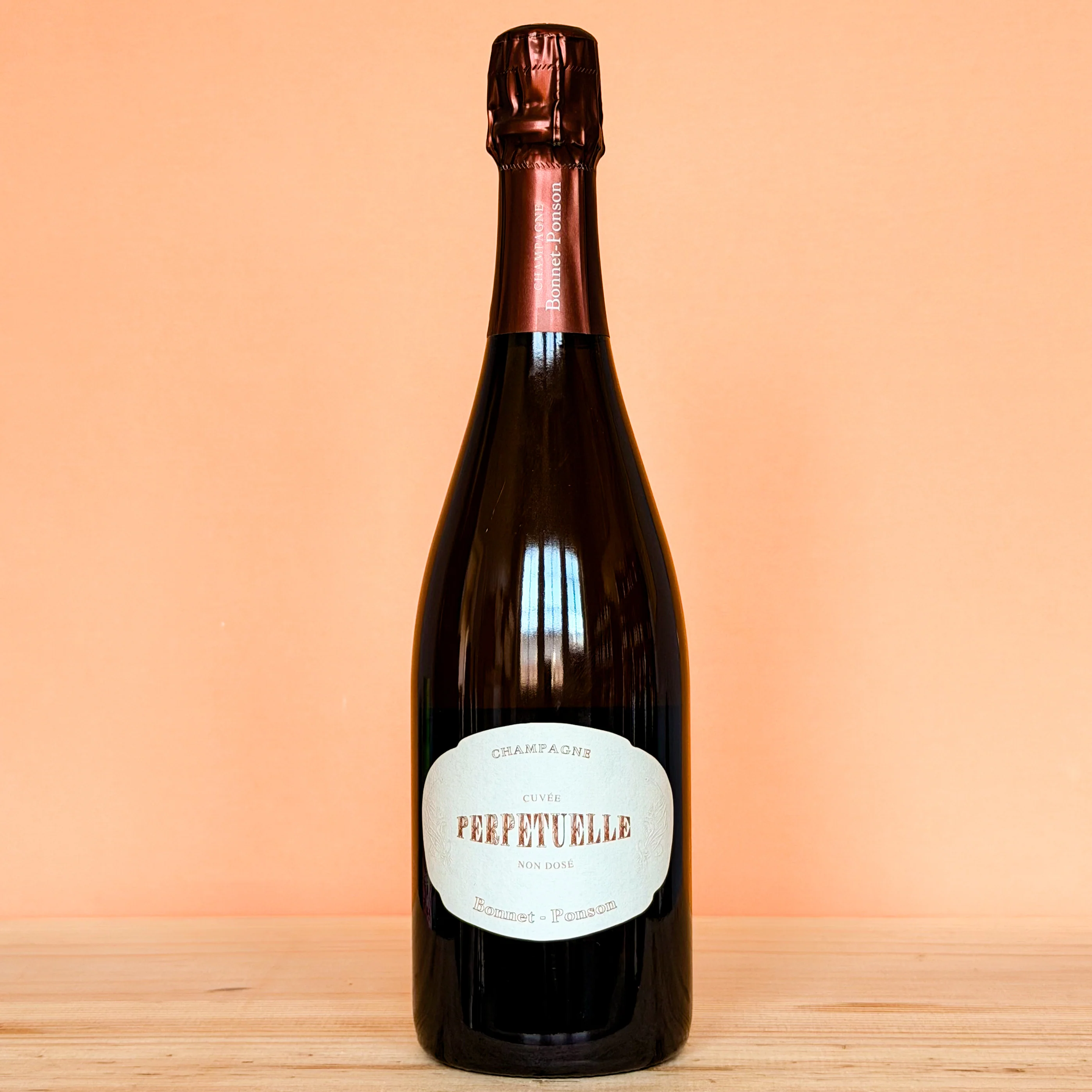
Cuvée Perpétuelle Non-Dosé
40% blend of reserve wines, direct press, spontaneous fermentation in stainless steel, concrete, and old oak, partial malolactic fermentation. 7 months in old oak sur lie followed by 48 months in bottle.
Thierry Bonnet and Cyril Bonnet
Grégoire Bonnet founded the estate in 1862. That’s 150 years of continuous production within the same family, now helmed by Thierry Bonnet and his son Cyril. They farm over 10 hectares including the Premier Cru and Grand Cru villages of Chamery, Vrigny, Coulommes la Montagne, Verzenay, and Verzy. This is spread over 50 parcels of 35-80 year old vines, all farmed organic since 2013 and certified in 2016, which puts them in rare company for Champagne. All initial fermentations are native yeasts, no filtration, and minimal sulfur. Their production is approximately 60,000 bottles per year.
These represent honest expressions and are part of the new guard (at least philosophically) of organic viticulture and crystalline assertions within a sea of mass production. They even make some true zero-zero cuvées, including their not to be missed Coteaux Champenois. These still wines are direct translations of the terroirs and remind us of the purity of Pinot and Chardonnay when they have not been “messed” with.
Product Information
Product Information
Shipping & Returns
Shipping & Returns
Description
40% blend of reserve wines, direct press, spontaneous fermentation in stainless steel, concrete, and old oak, partial malolactic fermentation. 7 months in old oak sur lie followed by 48 months in bottle.
Thierry Bonnet and Cyril Bonnet
Grégoire Bonnet founded the estate in 1862. That’s 150 years of continuous production within the same family, now helmed by Thierry Bonnet and his son Cyril. They farm over 10 hectares including the Premier Cru and Grand Cru villages of Chamery, Vrigny, Coulommes la Montagne, Verzenay, and Verzy. This is spread over 50 parcels of 35-80 year old vines, all farmed organic since 2013 and certified in 2016, which puts them in rare company for Champagne. All initial fermentations are native yeasts, no filtration, and minimal sulfur. Their production is approximately 60,000 bottles per year.
These represent honest expressions and are part of the new guard (at least philosophically) of organic viticulture and crystalline assertions within a sea of mass production. They even make some true zero-zero cuvées, including their not to be missed Coteaux Champenois. These still wines are direct translations of the terroirs and remind us of the purity of Pinot and Chardonnay when they have not been “messed” with.