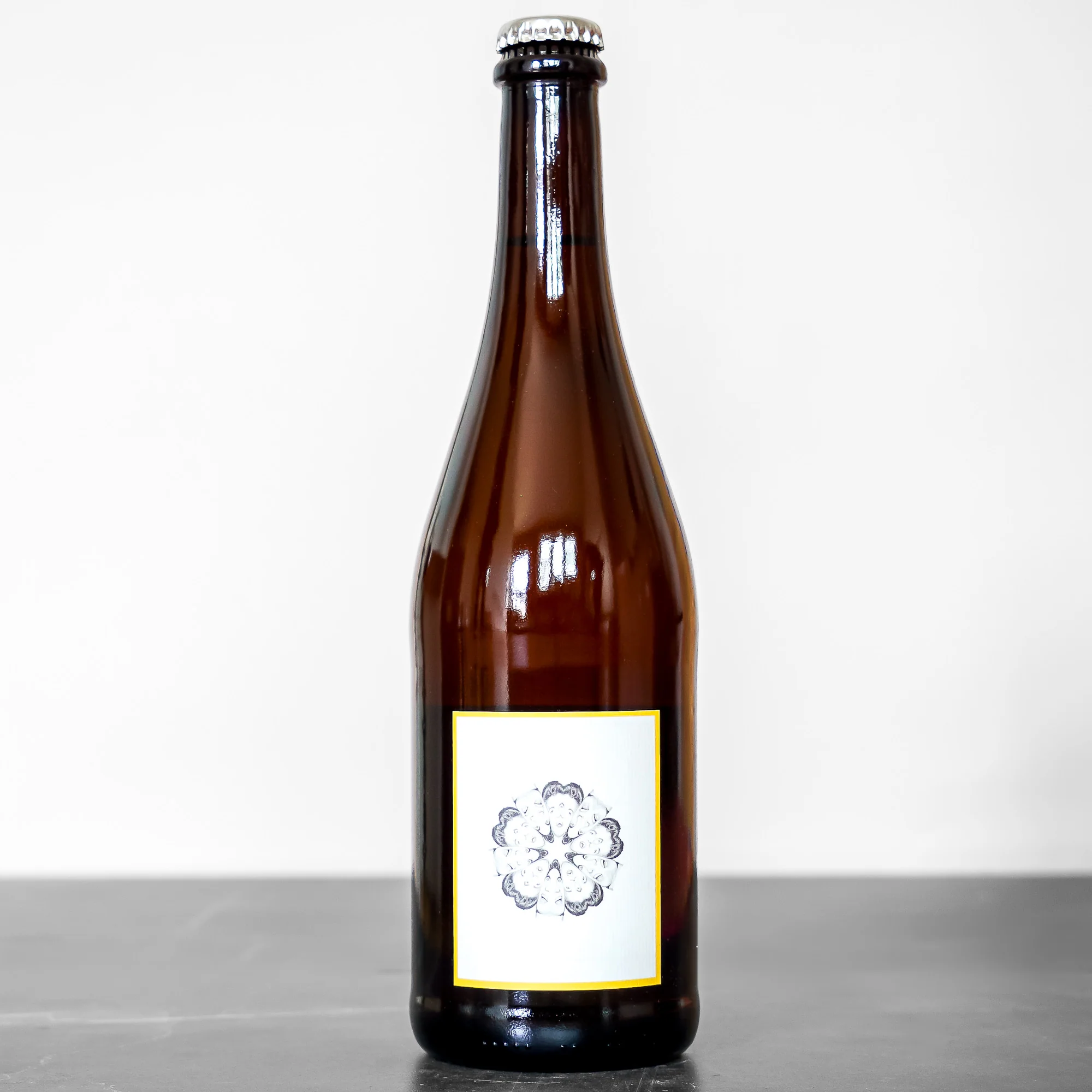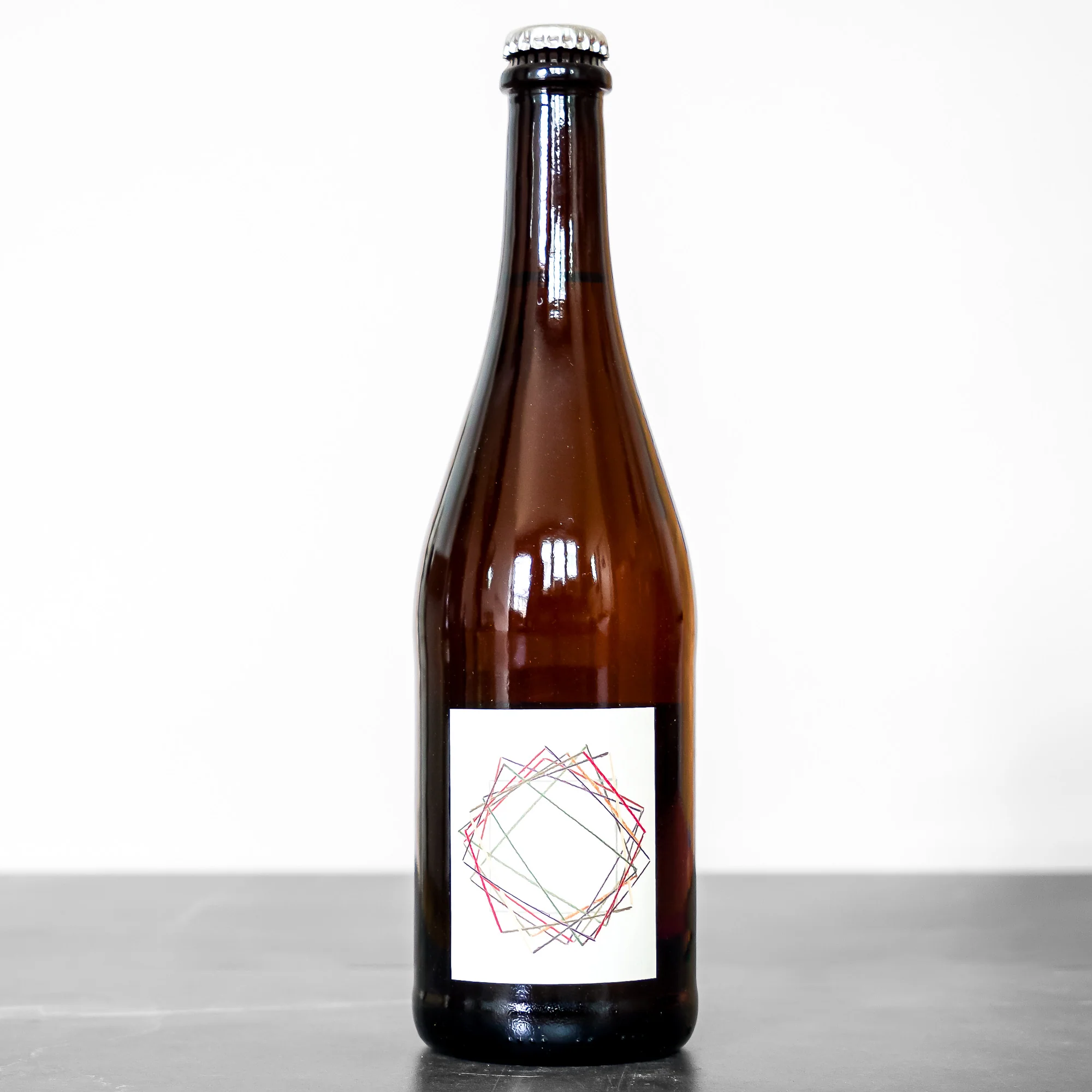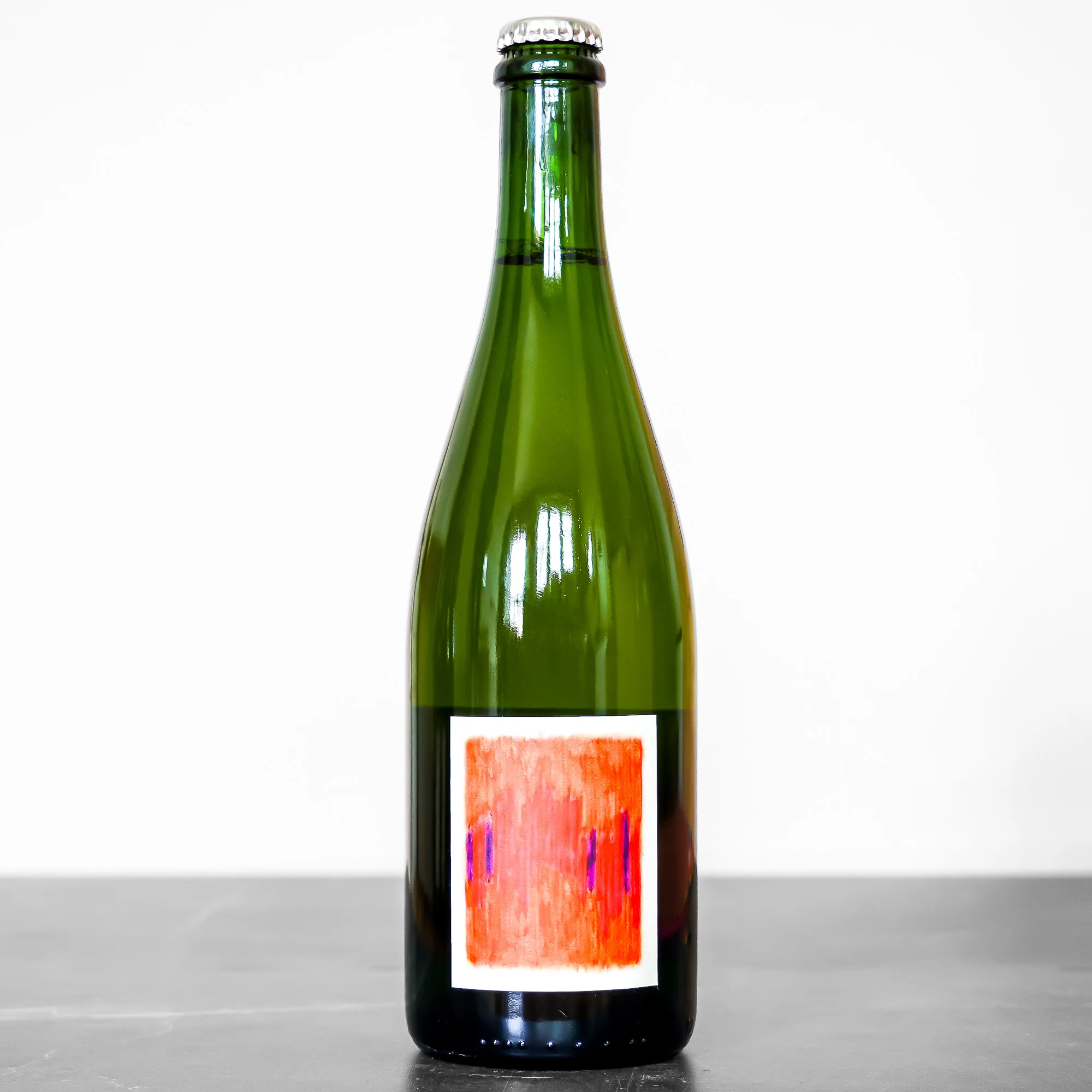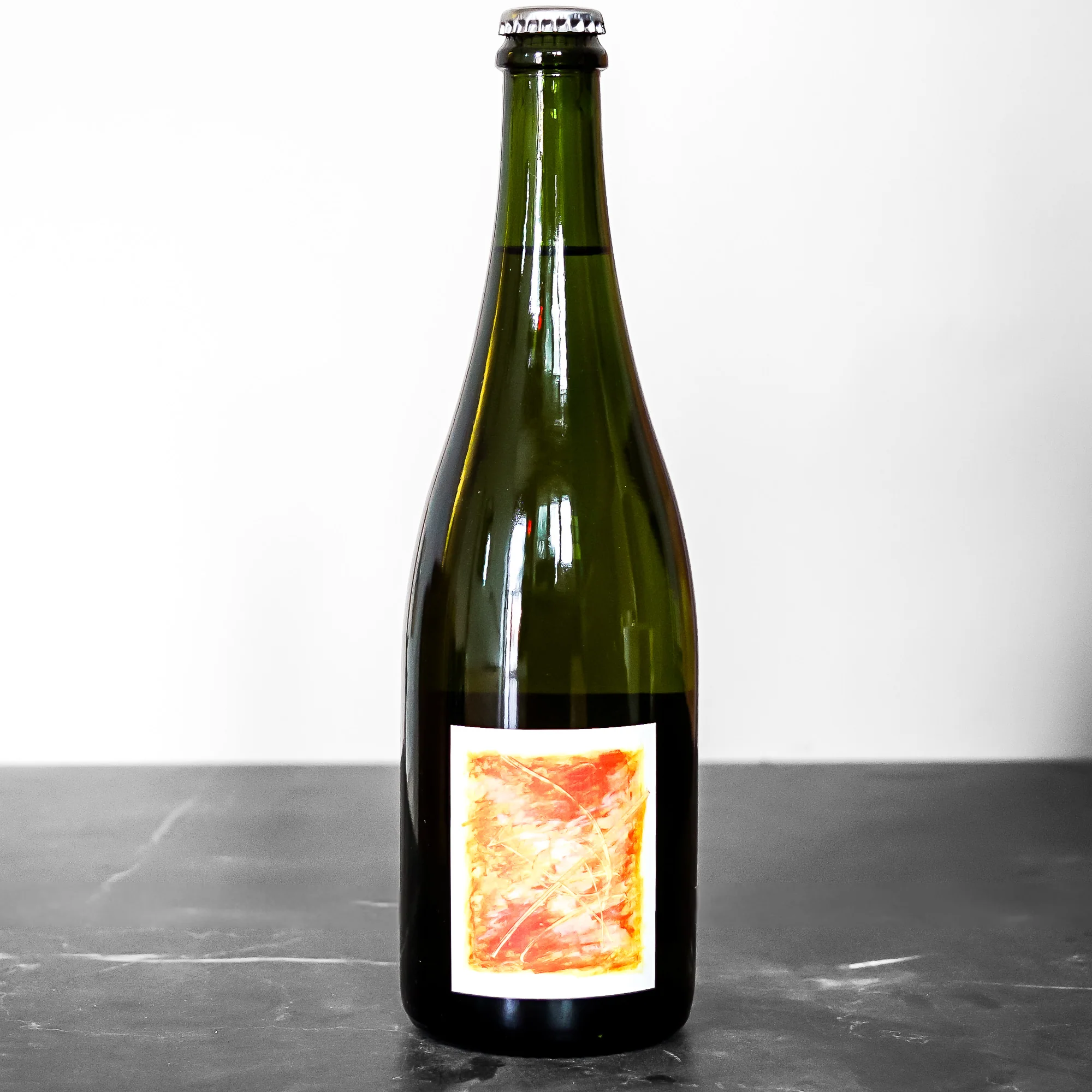
Morris
36% Ashmeads Kernel, 27% Wickson Crab, 18% Harrison, 14% Goldrush and 5% mixed crab and seedling apples from Morris Orchard in Monroe, VA. Clays of granitic schist, 950’ elevation. Wil Barnes, grower. Morris Orchard is a Virginia Century Farm, growing mixed fruits and vegetables and raising cattle.
The summer drought leading into harvest in 2023 gave us smaller fruit with thicker skins. This is also the largest crop yet from the higher tannin Wickson Crab. This cider has texture and ripe weight.
A continuous fermentation carried through the full harvest window from September through December: sorted apples soaked overnight on skins before being pressed into poly tanks. The multiple components were then blended to finish fermentation in the bottle. Bottles aged on lees for a minimum of 6 months before being riddled and disgorged by hand.
Patois Cider
Patois is Patrick Collins and Danielle LeCompte. Our focus is balance: How do untended apple trees maintain their ecological equilibrium, and how can an orchard mirror this dynamic? How will several successions of microorganisms collectively transform the fruit? How do we align ourselves and our work with the interconnecting cycles of nature? Can two people do this?
We don’t own land because our scale cannot support those costs. Foraging allows us to utilize existing (if scattered) noncommercial fruit of supreme quality. These trees hold both the historical lessons of past plantings - sites proven by survival - and the genetic renewal through seedlings for future resilience. We observe these trees and attempt to restore them where we have regular access. We may also seek to propagate them through both grafting and sprouting seeds should landowners allow. Sometimes we imagine our own orchard of our favorite found varieties interspersed with vines; sometimes we think no single Shangri-La will ever approach the complexity of so many unique inputs assembled by a century of chance.
We work fairly oxidatively in the cellar, due partly to aesthetic aims and partly to our minimal infrastructure. Everything is done by hand on a one or two person scale. Sparkling wine can be constrained by technique and fixed parameters, but we try to think creatively to achieve our goals with only fruit and time. While the ciders and wines will continue to evolve in the bottle upon release, they are not precious and are meant to be enjoyed.
We hope to demonstrate that conventionally undervalued fruit is capable of producing delicious and complex wines when treated with intention and care.
Original: $23.00
-70%$23.00
$6.90Product Information
Product Information
Shipping & Returns
Shipping & Returns
Description
36% Ashmeads Kernel, 27% Wickson Crab, 18% Harrison, 14% Goldrush and 5% mixed crab and seedling apples from Morris Orchard in Monroe, VA. Clays of granitic schist, 950’ elevation. Wil Barnes, grower. Morris Orchard is a Virginia Century Farm, growing mixed fruits and vegetables and raising cattle.
The summer drought leading into harvest in 2023 gave us smaller fruit with thicker skins. This is also the largest crop yet from the higher tannin Wickson Crab. This cider has texture and ripe weight.
A continuous fermentation carried through the full harvest window from September through December: sorted apples soaked overnight on skins before being pressed into poly tanks. The multiple components were then blended to finish fermentation in the bottle. Bottles aged on lees for a minimum of 6 months before being riddled and disgorged by hand.
Patois Cider
Patois is Patrick Collins and Danielle LeCompte. Our focus is balance: How do untended apple trees maintain their ecological equilibrium, and how can an orchard mirror this dynamic? How will several successions of microorganisms collectively transform the fruit? How do we align ourselves and our work with the interconnecting cycles of nature? Can two people do this?
We don’t own land because our scale cannot support those costs. Foraging allows us to utilize existing (if scattered) noncommercial fruit of supreme quality. These trees hold both the historical lessons of past plantings - sites proven by survival - and the genetic renewal through seedlings for future resilience. We observe these trees and attempt to restore them where we have regular access. We may also seek to propagate them through both grafting and sprouting seeds should landowners allow. Sometimes we imagine our own orchard of our favorite found varieties interspersed with vines; sometimes we think no single Shangri-La will ever approach the complexity of so many unique inputs assembled by a century of chance.
We work fairly oxidatively in the cellar, due partly to aesthetic aims and partly to our minimal infrastructure. Everything is done by hand on a one or two person scale. Sparkling wine can be constrained by technique and fixed parameters, but we try to think creatively to achieve our goals with only fruit and time. While the ciders and wines will continue to evolve in the bottle upon release, they are not precious and are meant to be enjoyed.
We hope to demonstrate that conventionally undervalued fruit is capable of producing delicious and complex wines when treated with intention and care.